


Whether you’re dreaming of a bigger backyard in Karori or a low-maintenance apartment in Te Aro, every great property move starts with one crucial bit of information: what your home is really worth right now. A solid property appraisal is the foundation of your entire plan, turning a vague idea into a real, actionable strategy.
Your Next Move Starts With Your Current Home’s Worth
Deciding to downsize or upsize is a huge life step, full of excitement and new possibilities. But before you start scrolling through listings in Khandallah or picturing a sea view from Island Bay, the most powerful thing you can do is get a clear handle on your current financial position.
Knowing your home’s value isn’t just about a number. It’s about giving yourself clarity and control over what comes next. As your local Wellington real estate specialist, I’m here to provide that clarity so you can move forward with confidence.
This knowledge gives you the power to:
- Set a realistic budget for your next home.
- Approach banks with confidence, knowing exactly what your equity looks like.
- Time your move to make the most of the Wellington market.

From “What If?” to “What’s Next?”
As a local Wellington agent, I see it happen all the time a precise valuation completely transforms a homeowner’s journey. It’s the moment they shift from wondering “what if?” to planning “what’s next?”.
A family in a Brooklyn villa might discover they have far more equity than they realised, suddenly opening up options for a larger home they thought was years away. On the other hand, empty-nesters in Wadestown could find that downsizing to a modern Thorndon apartment frees up a significant nest egg for travel and retirement.
The Wellington market has its own unique rhythm. It’s influenced by everything from Reserve Bank OCR announcements to local council zoning changes in suburbs like Newtown or Ngaio. Understanding where your property fits into this picture is absolutely essential. It helps you make smart, strategic decisions instead of purely emotional ones.
Knowing your property’s value is the first, most critical step in creating a successful and stress-free transition to your next home. It replaces uncertainty with confidence.
Getting a clear picture of your home’s worth is easier than you probably think. A professional appraisal looks at your property’s unique features, what similar homes in your immediate area have sold for recently, and the general feeling of the current market.
If you’re wondering what your property is worth, you can get the ball rolling by requesting a free, no-obligation appraisal. It’s the best way to get the accurate insights you need to plan your next chapter.
What a Professional Property Appraisal Really Involves
Let’s pull back the curtain on what a real estate appraisal actually is, because it’s a world away from those instant online estimates. A professional appraisal is a proper, hands-on process. It’s all about uncovering the true market value of your property, giving you the solid numbers you need when you’re thinking of downsizing or upsizing.
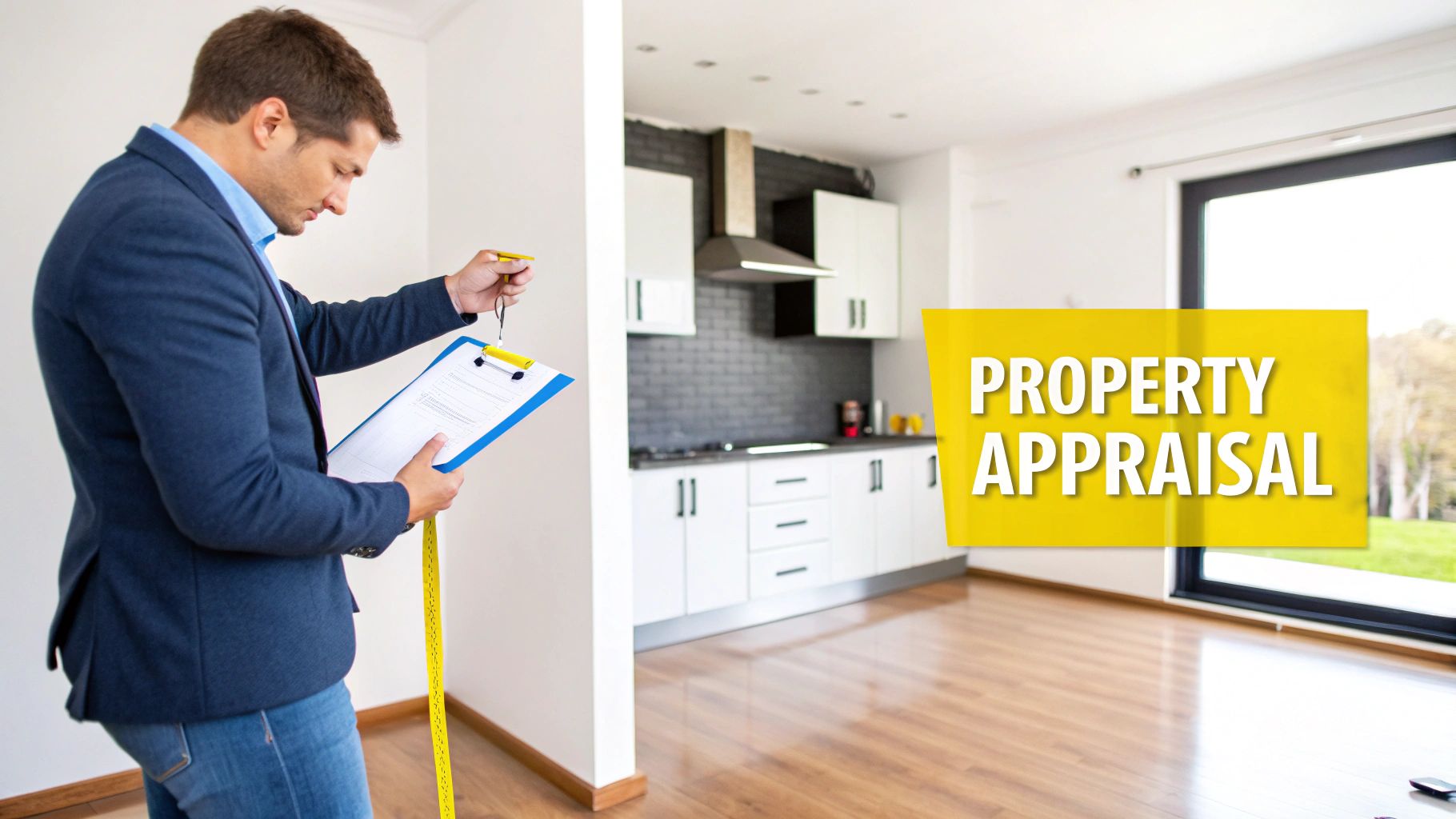
When I come to a home, the first thing I do is a thorough walk-through. I’m looking at everything the condition, the flow of the layout, the size, and all the unique features that make your place special. This could be a beautifully renovated kitchen in a Brooklyn bungalow, a sun-drenched deck in Hataitai, or the original character details in a classic Kelburn villa. These are the things an algorithm just can’t see.
Unpacking the Comparative Market Analysis
A huge part of my appraisal is what we call the Comparative Market Analysis (CMA). This is where deep, local knowledge really comes into play. I carefully analyse recent, comparable sales right in your immediate area, whether you’re in Wadestown, Wilton, or Vogeltown.
But it’s not just about matching square meterage and the number of bedrooms. My experience in the Wellington market allows me to weigh up all the little nuances that make a big difference here.
Key local factors include things like:
- Proximity to desirable school zones, which is a massive value-driver in suburbs like Karori and Khandallah.
- Access to public transport and how easily you can walk to local shops and cafes in areas like Newtown or Aro Valley.
- Wellington-specific considerations, such as a property’s earthquake resilience rating and its all-important sun aspect.
These elements can seriously shift a property’s final value, which is why having an expert on the ground is so critical. For a deeper dive into the mechanics of property valuation, you might find a comprehensive guide to the home appraisal process helpful, as it details various valuation methods.
An appraisal isn’t just a report; it’s a strategic tool. It provides the solid, evidence-based foundation you need to confidently plan your next move in the property market.
Ultimately, this whole process gives you a realistic and accurate picture of your home’s worth. Understanding why getting an appraisal is easier than you think is the first step toward making a smart, empowered decision about your future. It’s about replacing guesswork with a clear, reliable figure so you can move forward with total confidence.
Navigating Online Estimates vs Professional Valuations
When you first start thinking about a move, it’s only natural to jump online and use a free valuation tool. They’re quick, easy, and give you a rough idea of your home’s worth right away. These automated estimates can be a decent starting point, offering an instant snapshot based on public data and algorithms.
But it’s absolutely critical to understand their limitations, especially in a market as unique and varied as Wellington’s.
An algorithm can’t see the stunning harbour view from your Mount Victoria apartment. It doesn’t know about the high-end kitchen renovation you just completed in your Roseneath home, nor can it appreciate the value of being on a quiet, sought-after street in Crofton Downs. These are the kinds of human, real-world details that can significantly swing a property’s true market value.

Why an In-Person Appraisal Is Non-Negotiable
Relying only on digital data is a risky game. If an online estimate is too high, you might overprice your property, leading to a long, frustrating time on the market. If it’s too low, you could leave a serious amount of money on the table money you’ll need for your next purchase.
A professional, in-person appraisal from an experienced agent is the only way to get a truly accurate and reliable figure.
Here’s what I look for during an appraisal that an online tool simply can’t see:
- Property Condition: The specific state of your home, including any recent upgrades, repairs, or areas needing a bit of attention.
- Unique Features: Those special qualities that make your property stand out, like a beautifully landscaped garden in Karori or a rare off-street park in Aro Valley.
- Local Nuances: The subtle but powerful market drivers in your specific suburb, such as sun exposure, street appeal, and how close you are to local cafes and transport.
An online estimate is a ballpark guess; a professional appraisal is a strategic valuation. The difference is crucial when you’re making major financial decisions about your future.
Think of an online tool as a compass pointing you in a general direction. An expert appraisal, on the other hand, is your detailed map, giving you the precise coordinates you need to navigate the journey ahead.
It provides the solid, evidence-based foundation you need for financial planning, ensuring you can move forward with confidence and clarity. As a local real estate professional, I can provide that detailed map, making sure you understand every aspect of your property’s value in today’s market.
How Market Trends and Economic Shifts Affect Value
Your home’s value isn’t a fixed number; it’s always shifting with the wider economic climate. Getting your head around these bigger forces can help you feel more in control when you’re weighing up a move, whether you’re downsizing or upsizing. These trends have a very real, direct impact on Wellington’s property market.
National economic news is a huge piece of the puzzle. When the Reserve Bank of New Zealand (RBNZ) adjusts the Official Cash Rate (OCR), it sends ripples through the entire housing market. A lower OCR usually means banks offer more attractive mortgage rates, which naturally gets more buyers interested because borrowing is cheaper. On the flip side, a higher OCR can cool things down by making mortgages pricier, thinning out the crowd of active buyers.
Connecting National Trends to Our Local Market
While the OCR sets the national mood, it’s the local Wellington factors that really determine what’s happening to property values in our suburbs. Things like population growth, for example, directly fuel the demand for housing.
New infrastructure projects also play a big part. Think about transport upgrades or new community facilities in suburbs like Johnsonville or Tawa these improvements make an area more appealing and can give property prices a healthy nudge upwards.
It’s this blend of big-picture economics and hyper-local drivers that creates the unique market conditions we see across Wellington. This is exactly why a home in Karori might follow a different value trend compared to a similar place over in Te Aro. For a closer look at these dynamics, you can dive into our analysis of Wellington market conditions, which breaks down the current data.
Understanding the ‘why’ behind market movements is empowering. It transforms complex economic news into practical knowledge you can use to plan your next move with confidence.
Economic forecasts are also worth keeping an eye on. Recently, analysis from major banks has pointed towards modest house price increases, spurred on by expected RBNZ rate adjustments and an improving economy. One major bank even updated its forecast to predict a slight year-on-year increase in house prices, which just shows how quickly expert predictions can shift. You can read more about these housing market forecasts to get that broader perspective.
Seasonal Shifts and Market Rhythm
Beyond the economic data, Wellington has its own distinct seasonal rhythm. The property market naturally ebbs and flows with the calendar.
- Spring and Summer: This is traditionally our busiest period. More daylight and better weather bring more buyers out to open homes, which often leads to more competition and a sense of urgency.
- Autumn and Winter: The market can feel quieter, but this is when the really serious, motivated buyers are often looking. For sellers, it can actually be a great time to stand out from the crowd with less competition.
Ultimately, knowing how to navigate these trends is the key to a successful move. As a local agent, I keep my finger on the pulse of these changes from RBNZ announcements to the buyer mood in suburbs like Island Bay, Khandallah and Vogeltown. That deep-seated knowledge allows me to give you timely, relevant advice that’s tailored to your specific goals and situation.
Preparing Your Home to Maximise Its Appraisal Value
When you’re gearing up to downsize or upsize, getting the best possible appraisal is absolutely key. The good news is, you have a lot more influence over the final number than you might realise. A bit of thoughtful preparation really does go a long way.
It’s not about spending a fortune on major renovations. Instead, the smart money is on high-impact, low-cost actions that make your home shine and create a fantastic first impression. These small efforts add up to create a powerful overall picture for an appraiser, and eventually, for potential buyers too.
Simple Steps with Big Impact
Before any appraisal, I always advise my clients to walk through their home with a fresh pair of eyes as if they’re a buyer seeing it for the very first time. This simple change in perspective helps you spot all the little things you’ve stopped noticing over the years.
Here are a few of the most important areas to put your energy into:
- Declutter to Create Space: This is hands-down the most effective thing you can do. Clear off the countertops, tidy those shelves, and put away any bulky furniture that cramps a room. It instantly makes spaces feel larger, brighter, and more inviting, allowing an appraiser to see the home’s true potential.
- Tackle Minor Repairs: That dripping tap, a sticky door handle, or a few scuffs on the skirting boards might seem insignificant, but together they can suggest a lack of maintenance. Fixing these little things shows you’ve taken pride in your home and that it’s been well cared for.
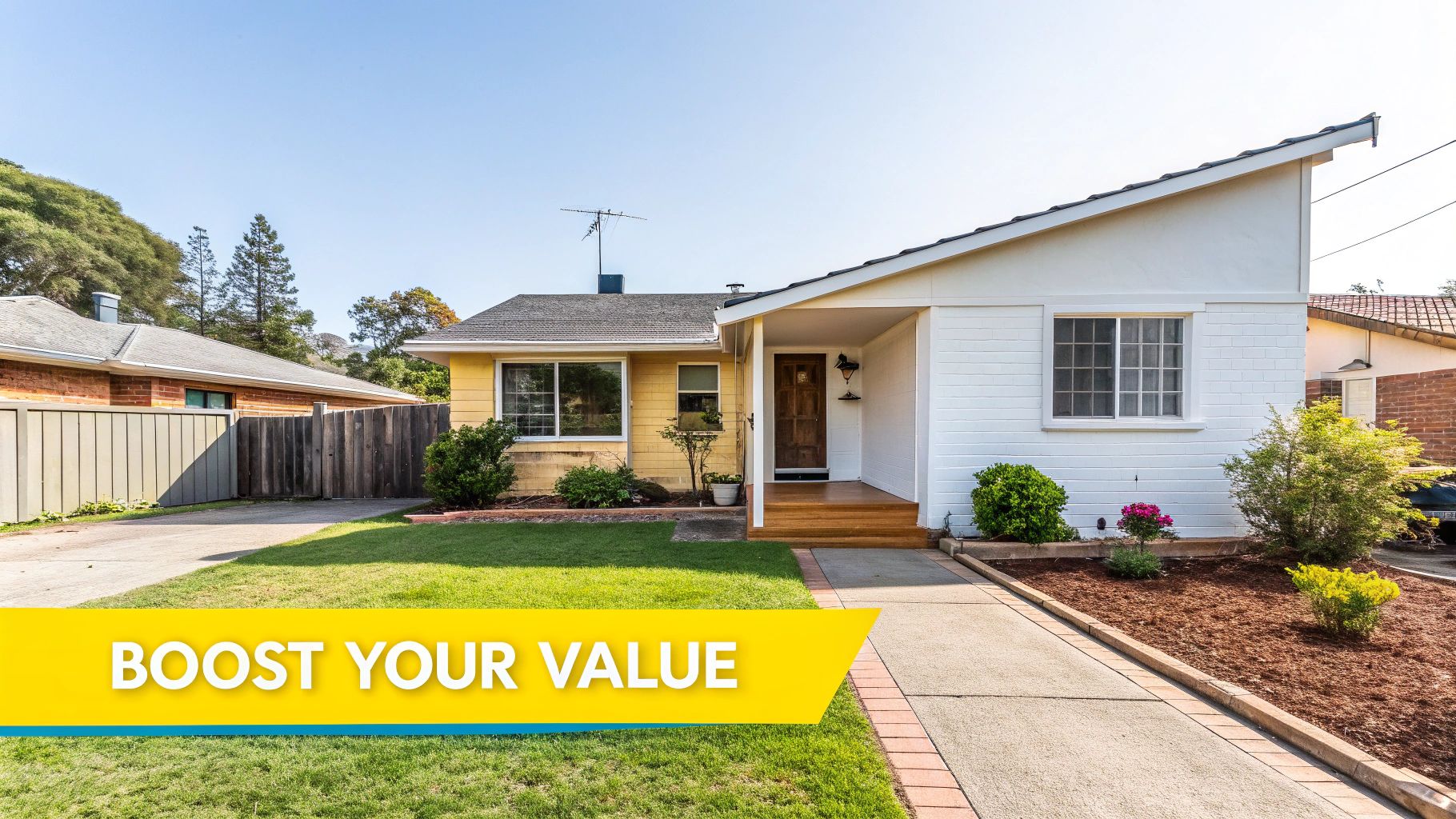
- Boost Your Kerb Appeal: First impressions count, and they start from the street. A freshly mown lawn, tidy garden beds, a clean front door, and a water-blasted path make a world of difference. It sets a positive, welcoming tone before anyone even steps through the door.
- Let There Be Light: Give your windows a good clean, open all the blinds and curtains, and check for any blown lightbulbs. A home filled with natural light always feels more spacious, warm, and appealing.
Presenting a clean, well-maintained, and clutter-free home is one of the easiest ways to add value. It allows an appraiser to focus on your property’s best features without distraction.
For homeowners looking for more ideas, there are some great ideas in my FREE eBook: 450 Ideas to Sell Your Home Faster that offer practical tips for any kind of market.
Tapping into a Professional Network
I know that getting a home ready for sale can feel like a massive task, especially when you’re already juggling work and family. That’s where my professional network can be a real lifesaver.
Over my years in Wellington real estate, I’ve built up a fantastic list of contacts from painters and gardeners to cleaners and handymen. They do great work and can get your property looking its absolute best, quickly and without breaking the bank. If you need a hand, just let me know. I’d be happy to connect you with the right person for the job.
Using Your Appraisal to Plan Your Next Move
So, you’ve got a clear, accurate appraisal in your hands. This is where the daydreaming stops and the real planning begins.
This valuation is the key that unlocks your strategy, turning the fuzzy idea of downsizing or upsizing into a concrete, actionable plan. It’s time to connect the numbers to your next steps and see what’s truly possible for you and your family.
The first, and most important, calculation is figuring out your usable equity. It’s a simple sum: the estimated sale price from your appraisal, minus whatever you still owe on your mortgage.
This number is the foundation of your budget for your next home. It defines what you can comfortably afford and shapes the entire financial structure of your move.
Turning Data into Decisions
This is where things get really exciting. Once you know your equity, you can start exploring real-world scenarios with genuine confidence.
Let’s look at a couple of common examples I see all the time here in Wellington:
- The Upsizing Family: Imagine a growing family in their two-bedroom Vogeltown home. They get an appraisal and discover their property is worth more than they thought. Suddenly, that move to a larger, three-bedroom home in a family-friendly spot like Island Bay isn’t just a dream it’s a real possibility, giving them the space they desperately need without overstretching their budget.
- The Downsizing Empty-Nesters: Or picture a couple in a big, multi-level family home in Khandallah. They realise they can sell, buy a modern, low-maintenance apartment in Thorndon, and still have a significant chunk of cash left over to top up their retirement savings and finally take those trips they’ve been planning.
These aren’t just hypotheticals. These are the kinds of smart, data-driven decisions that Wellington homeowners are making every day. It’s all about using an accurate valuation to align your property with your life’s next chapter.
Navigating the Wellington Market
Of course, your home’s value doesn’t exist in a vacuum. Understanding the broader market is crucial when you’re planning a move.
Across New Zealand, the housing market is showing signs of recovery after a bit of a rollercoaster ride. As of mid-2025, the national median house price has stabilised, which reflects improving consumer confidence and more manageable borrowing costs.
But the national picture only tells part of the story. Regional differences are huge some areas are seeing price surges while others are holding steady. You can get more details about New Zealand’s property price history and trends on Global Property Guide.
An accurate appraisal empowers you to make strategic decisions. It’s not just about knowing what your home is worth today, but about using that information to build the future you want.
This local knowledge is where I can really help. As a Wellington Ray White real estate agent, I live and breathe the subtle market differences between suburbs like Karori and Ngaio, Island BAy and Lyall Bay, or Brooklyn and Wadestown. I can help you interpret your appraisal within the context of what’s actually happening on the ground, right here in our city.
Whether you’re thinking of downsizing, upsizing, or just making a change, the journey always starts with a clear understanding of your property’s value. From the initial appraisal to the final sale, I’m here to guide you through the entire process, making sure you feel informed and confident every step of the way.
Thank you for reading this blog, and I hope this was informative. I’m Halina, Wellington’s highly recommended local Ray White real estate agent, and I’m dedicated to helping home sellers achieve great results in any market. Please feel free to get in touch to discuss your situation.
Your Appraisal Questions, Answered
When you’re weighing up a big move like downsizing or upsizing, getting a clear picture of your finances is the first, most crucial step. Here are some of the most common questions I get from Wellington homeowners about property appraisals.
How Long Does a Property Appraisal Take?
The actual walk-through of your property is quicker than most people think. I can usually get a great feel for your home’s condition, layout, and unique selling points in about 30 to 60 minutes.
The real work happens after I leave. That’s when I dive into the latest market data, analysing recent comparable sales right here in your Wellington suburb. This in-depth research is what allows me to build a comprehensive, accurate report for you.
What’s the Difference Between an Appraisal and a Registered Valuation?
This is a fantastic question, and it’s a point of confusion for many. Think of it this way: a real estate appraisal, like the complimentary one I offer, is a market assessment. Its purpose is to figure out a likely selling price to guide our sales and marketing strategy.
A registered valuation, on the other hand, is a formal, legally-binding document that you pay a registered valuer to complete. Banks almost always require one for mortgage applications and lending decisions.
Should I Do Major Renovations Before an Appraisal?
Not necessarily. While a sparkling clean home and fantastic presentation absolutely boost your home’s appeal, big-ticket renovations don’t always give you a dollar-for-dollar return.
My best advice? Chat with me before you start knocking down walls. With years of experience in the Wellington market, I can offer honest feedback on which updates are most likely to add real value. Sometimes, a fresh coat of paint and a good declutter can make a far bigger impact than a costly new kitchen.
Thank you for reading, and I hope this article has been informative. I’m Halina, your local Ray White agent, dedicated to helping Wellington home sellers achieve fantastic results in any market.

.
.
.
.
.
.
.
.
.
.
.
.
Disclaimer: The real estate content shared on this blog is intended for general informational purposes only and industry observations. The content may reflect personal views or reference third-party sources, but it is not a substitute for tailored professional advice. Real estate decisions often involve legal, financial, and regulatory complexities, and readers should seek independent guidance from qualified specialists such as legal advisors, financial consultants, or compliance professionals before acting on any information presented here. No warranty is given as to the accuracy, completeness, or current relevance of the material.